

What is the Difference Between IEC Fiber Grades A, B, and C?
How high-speed 400G/800G networks demand a transition from legacy connectivity to Grade B precision.
As high-speed networks migrate to 800G, the problem of inconsistent components has become a primary bottleneck. The shift to 800G and beyond requires high quality, low-loss optical terminations. ScaleFibre delivers IEC Grade B as standard to deliver the link budget headroom required for the next generation of hyperscale growth.
IEC Performance Grades
While the IEC 61753-1 standard defines clear attenuation limits, much of the market still relies on Grade C or lower-tier components. For modern connectivity, the shift to Grade B is no longer optional, it is the baseline for sustainable link budgets.
IEC Grade A
Niche Lab SpecThe practical limit of fiber alignment for specialized laboratory or long-haul spans.
- Mean IL ≤0.07 dB
- Max IL ≤0.15 dB (97% batch)
- Extreme over-spec for most builds
IEC Grade B
The Smart ChoiceScaleFibre’s performance baseline engineered for 400G/800G and AI clusters.
- Mean IL ≤0.12 dB
- Max IL ≤0.25 dB (97% batch)
- Optimal high-precision machine polish
IEC Grade C
Budget OnlyGeneric connectivity for where budget is more important than precision.
- Mean IL ≤0.25 dB
- Max IL ≤0.50 dB (97% batch)
- Common commercial grade polish
Measurable Impact
By mandating the Grade B standard, data centers realize immediate gains in signal integrity and link reliability.
≤0.12 dB
Grade B Mean Loss≤0.25 dB
Grade B Max (97% Batch)1/2
Half the Loss of Grade C≥60 dB
Return Loss (APC Grade 1)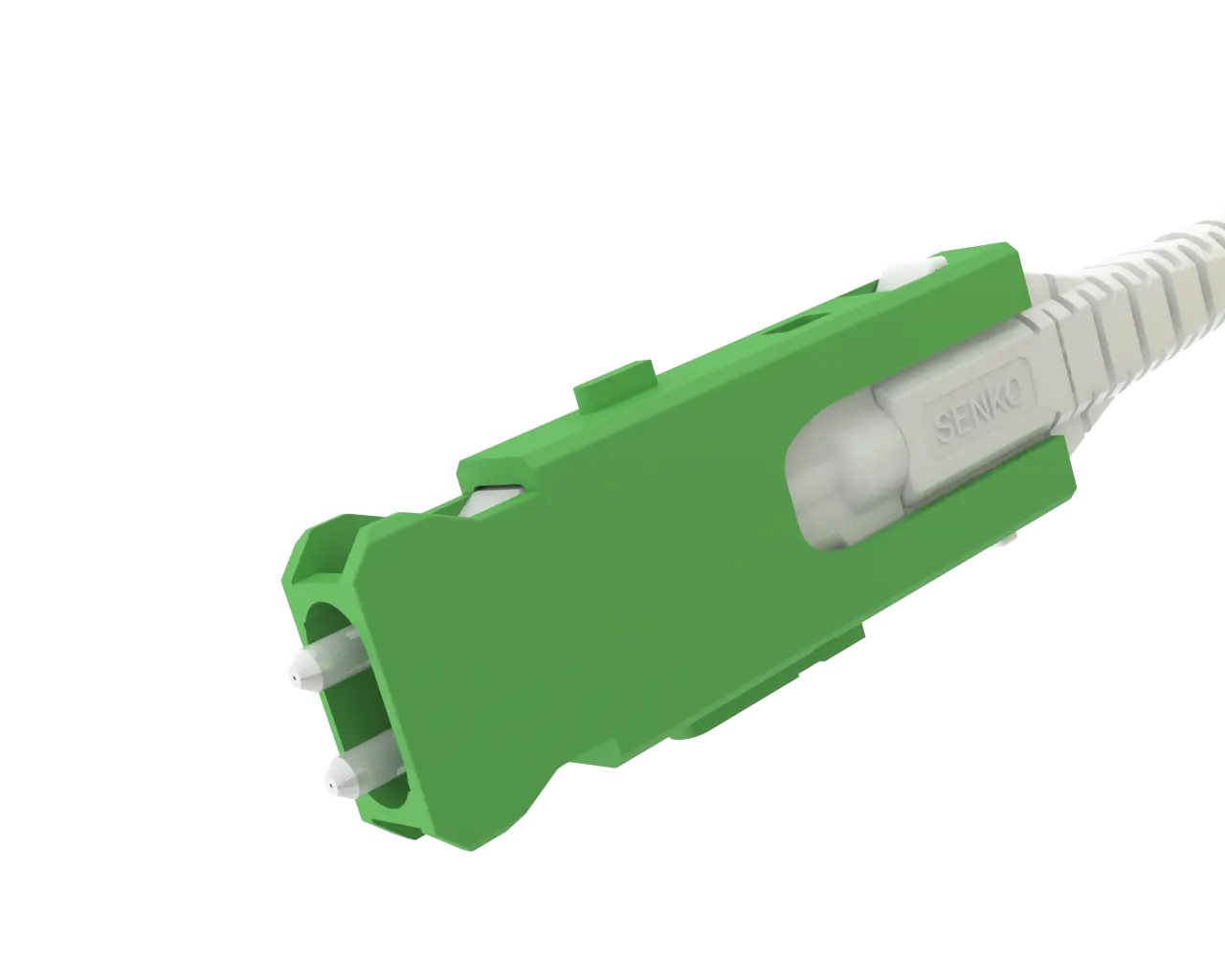
SN® Single Cord Duplex Fiber Patch Leads, 2mm
High-performance SN® 2mm round duplex fiber optic patch cords for ultra-high-density backbone, cross-connect, and equipment interconnects in data, telecom, and enterprise networks
View Product DetailsThe Anatomy of a Precision Connection
Ferrule Quality
Zirconia ceramic with sub-micron concentricity to ensure the fiber core is perfectly centered.
Connector Housing
High-grade thermoplastic with precision latching to eliminate mechanical ‘play’ and signal instability.
Polish & Geometry
Multi-stage machine polishing to achieve exact Radius, Apex Offset, and Fiber Height specifications.
Qualification & Testing
Rigorous pre-release mechanical and optical tests followed by 100% optical testing.
Primary Causes of Link Failure
Over 85 percent of link failures are caused by end face cleanliness or damage.
Common Market Product
- ✕Grade C Baseline: Typical loss of 0.25dB to 0.50dB per connection.
- ✕Inconsistent Geometry: Batch variability leads to core misalignment.
- ✕Legacy Lead Times: Sluggish supply chains with weeks of delay.
- ✕Exposed Ferrules: No integrated protection against dust and debris.
ScaleFibre Grade B Standard
- ✓Grade B Baseline: Guaranteed ≤0.12 dB mean loss across every batch.
- ✓Batch Verified: Batch interferometry testing ensures geometric compliance.
- ✓Agile Fulfillment: Rapid deployment model built for hyperscale growth.
- ✓Contamination-Free: Shuttered adapters block 85% of common link failures.
IEC 61753-1 Single-Mode IL Grading (Mean dB)
Standard LimitsReal World Applications
Where optical loss makes a massive impact.

AI Training Clusters
Securing the fabric where Grade B precision is required to minimize bit error rates (BER) in massive parallel processing.

Next-Gen 800G Architectures
Meeting the stringent total channel loss required for high-speed OSFP and QSFP-DD optics in AI backend networks.
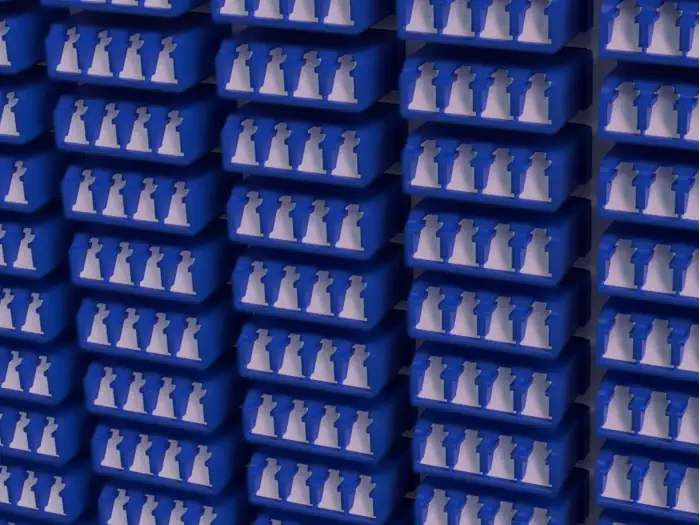
Ultra-High Density Fabrics
Combining Grade B low-loss performance with shuttered protection to ensure long-term signal stability in dense racks.
As we migrate toward 800G and 1.6T, the optical link budget has moved from a secondary consideration to the primary constraint on network architecture. Grade B precision is no longer optional but a requirement for survival.
Technical FAQ
Get Your Data Center Future Ready
Find out more about optical performance and insertion loss from ScaleFibre.
Contact ScaleFibreRequest a technical quote for your next AI cluster build.
References & Footnotes
- IEC 61753-1. ‘Fiber optic interconnecting devices and passive components performance standard’.
- ScaleFibre. ‘SN® Single Cord Duplex Fiber Patch Leads.’ [Source]
- Senko Advanced Components. ‘Low Loss Connectors and Fiber OD.’ [Source]
- Thorlabs. ‘Importance of Optical Fiber Connector End-Face Geometry.’ [Source]
- Photograph by Johannes Weber. Licensed under CC BY 2.0.