

Managing the High-Count Fiber Explosion with Digital Splice Management
How modern Telcos solve the 'Strand Crisis' using SmartRIBBON™ identification and Digital Splice Management.
Telecommunications networks are seeing a massive surge in data consumption, necessitating fiber counts often exceeding 3,456 strands in a single cable. This volume introduces challenges in identification and management where legacy tracking methods create a significant liability. One solution lies in modern platforms like Splice.me, which provide a digital twin to manage this complexity. By pairing TIA/EIA-598-C color coding with “ribbon-in-tube” architectures, telcos achieve restoration speeds up to 6X faster.
Modern Record Keeping
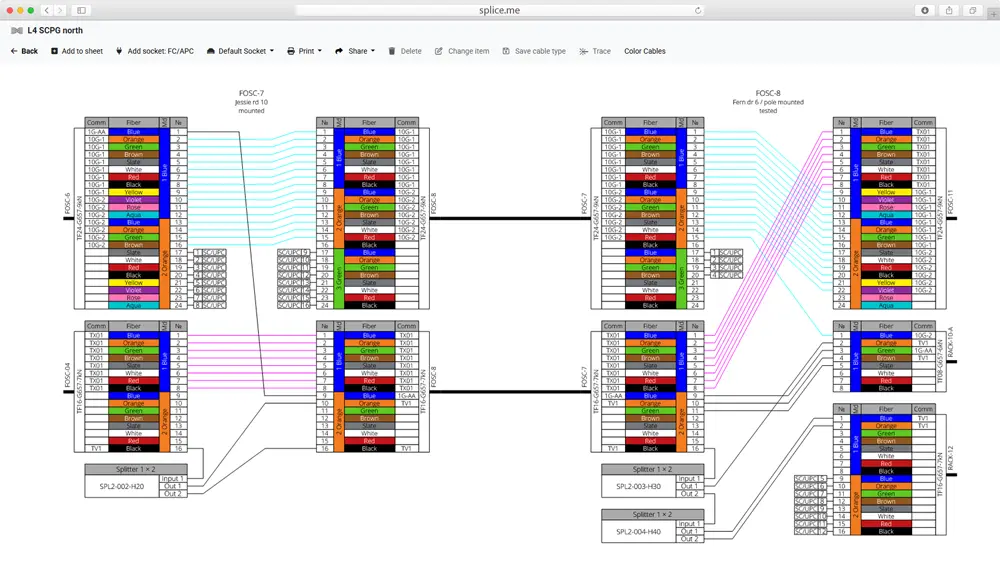
In high-density telco environments, physical fiber counts can now exceed 3,456 strands per cable. Legacy spreadsheets lead to "tab hell," making Splice.me a powerful tool for modern plant management.
- Real-time Sync: As-built documentation that remains synchronised with field reality.
- One-Click Tracing: Instantly trace complex circuits across miles of infrastructure.
- Mobile First: Provide field technicians with live, interactive splice matrices via the web.
Explore the most lightweight and fast fiber network management system →
High-Density Cable Solutions
Traditional Ribbon
BulkyLarge, bulky cables that take significant time to prepare.
- Poor mid-span access
- Large, rigid tubes
- Poor fiber density
Loose Tube
Low SpeedExceptional protection but limited in density and slow to splice.
- Individual fiber splicing
- No preferential bend
- Vital for distribution
SmartRIBBON™
Modern StandardCombines loose-tube identification with mass fusion speed.
- Deformable nesting tubes
- Doubles fiber density
- Huge reduction in splicing time
Operational Efficiency
Reducing the 'Mean Time To Repair' (MTTR) through better strand organization.
3 Clicks
To Document a Splice1:1
Digital Mirroring90 Min
To Splice 288F Cable6X
Faster Restoration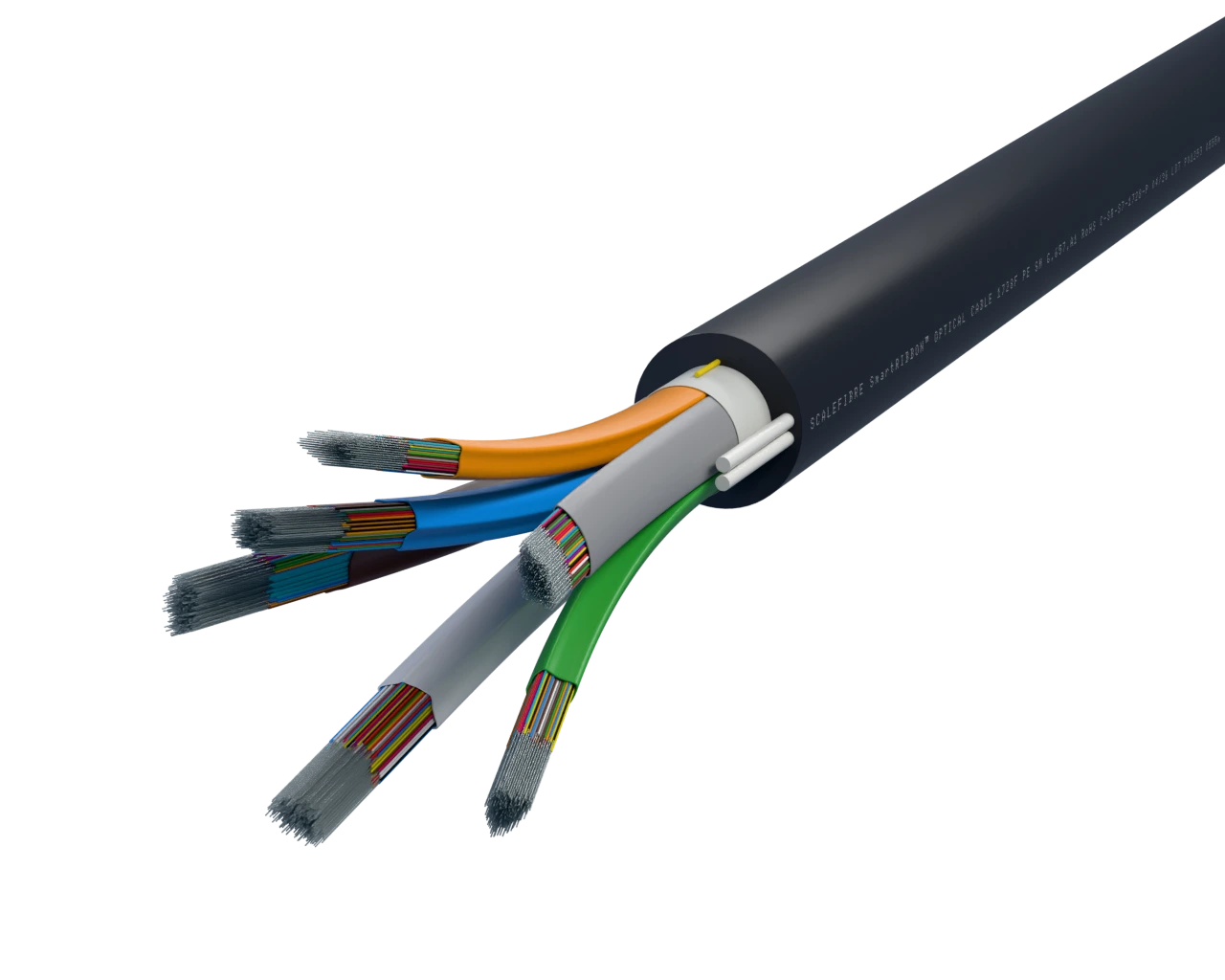
SmartRIBBON™ Optical Fiber Cable
Ultra high-density ribbon cable with flexible ribbon construction, engineered for space efficiency, fast mass fusion splicing or single fiber splicing in duct networks.
View SmartRIBBON DetailsThe Identification Hierarchy: Search & Verify
1. Tube Level
Tubes follow the TIA/EIA-598-C 12-color sequence for identification.
2. Ribbon Level
Ribbons are marked with tally-style band-marks for easy identification.
3. Strand Level
Strands follow the TIA/EIA-598-C 12-color sequence for identification.
4. Software Mapping
Connectivity is documented in Splice.me, creating a critical digital twin.
Legacy Documentation (Excel/CAD)
- ✕Tab Hell: Splicing data scattered across dozens of disconnected spreadsheets.
- ✕Static Records: No real-time updates; ‘As-Builts’ quickly become outdated.
- ✕Manual Tracing: Technicians spend hours manually tracing lines across layers.
- ✕Data Silos: Lack of a single system of truth for detailed connectivity.
Digital Splice Management (Splice.me)
- ✓Unified Matrix: A single system of truth for detailed strand connectivity.
- ✓Live Sync: Field updates are synchronised in real-time for an agile workforce.
- ✓One-Click Trace: Instantly view the entire end-to-end path of fibers.
- ✓Data Propagation: Comments and IDs propagate automatically through splice points.
Technical FAQ
References & Footnotes
- TIA/EIA-598-C: Standard for Fiber Optic Color Coding.
- Image courtesy of Wikimedia, https://commons.wikimedia.org/wiki/File:Fiber_Splice.jpg
