

Optical Transceivers Frequently Asked Questions
+ What's the difference between pluggable transceivers, NPO, and CPO?
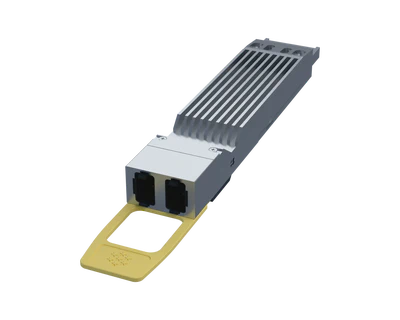
Pluggable optics (OSFP, QSFP112, QSFP-DD, QSFP+, SFP28) are user-serviceable modules that slot into a switch or NIC faceplate — the mainstream and universally-deployed approach today. Near-Packaged Optics (NPO) move the optical engine off the faceplate and onto the switch ASIC substrate, sharing a common package but remaining a discrete component — reducing per-lane electrical trace length and power draw versus pluggable. Co-Packaged Optics (CPO) integrate the optical I/O directly into the switch ASIC package — no electrical serdes lanes between the ASIC and optic, enabling the highest per-slot bandwidth and lowest per-bit power for next-generation AI-scale fabrics.
+ Which of the three should I choose?
For every production fabric shipping today, pluggable is the answer — NPO and CPO are early-technology categories not yet in broad volume. NPO and CPO become interesting at 3.2T and beyond, where pluggable-slot power budgets start to constrain fabric density. If you’re deploying now, choose pluggable; if you’re planning a fabric to be operational in 2027+, contact us to discuss NPO / CPO design-in options.